Why Version Control Exists: The Pendrive Problem
Before Git, GitHub, and cloud repositories became part of every developer’s daily life, software development looked very different. It was messier, riskier, and often frustrating. If you’ve been around long enough—or talked to senior developers—you’ve probably heard stories about pendrives, email attachments, and folders named final, final_v2, or latest_final_really_this_one.
This article explores why version control exists, using the pendrive analogy to explain the real problems developers faced before modern version control systems became mandatory.
Life Before Version Control
Imagine a small development team working on the same project.
There is no Git. No GitHub. No GitLab.
Instead, there is:
A single pendrive
Email attachments
Shared folders on someone’s computer
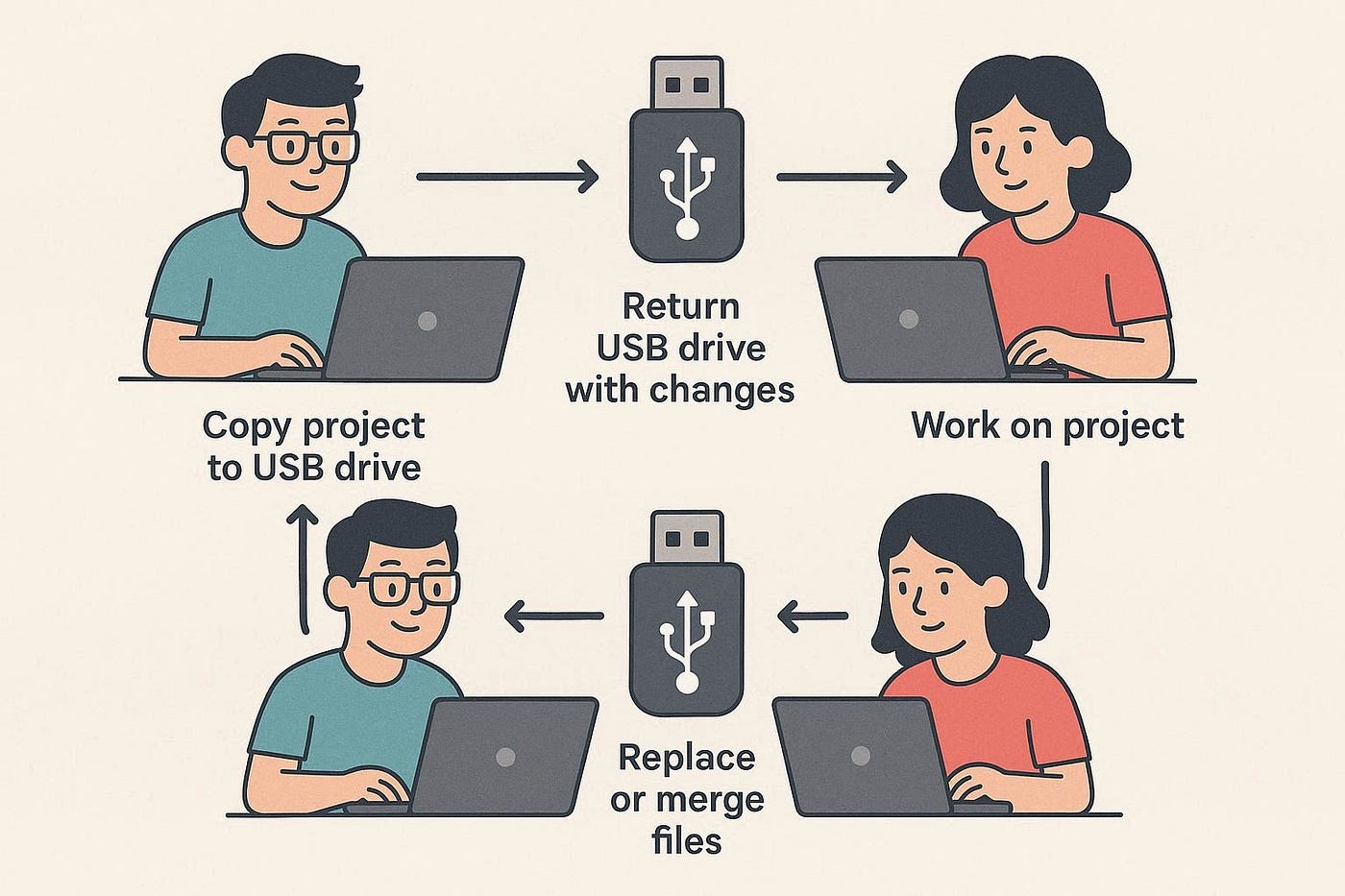
The workflow usually looked like this:
Developer A writes code and saves it to a pendrive.
Developer A hands the pendrive to Developer B.
Developer B copies the files, makes changes, and saves them back.
Someone forgets to copy the latest version.
Chaos begins.
This approach worked only when projects were tiny and teams were small. As soon as complexity increased, problems became unavoidable.
The Pendrive Analogy in Software Development
Think of a pendrive as the single source of truth.
Whoever has the pendrive has the latest version of the code.
Sounds simple, right? But this simplicity hides serious flaws.
Example Scenario
You update
login.json the pendrive.Your teammate updates
dashboard.json their local machine.Both changes are important.
Only one version fits on the pendrive at a time.
Someone’s work will be lost.
To avoid this, developers started creating copies:
project_finalproject_final_v2project_latestproject_latest_final
Instead of solving the problem, this created confusion.
No one knew:
Which version was correct
Who changed what
When the change was made
Why the change was made
Problems Faced Before Version Control Systems
1. Overwriting Code
Two developers edited the same file. One copied their version last.
The other developer’s work vanished.
No warning. No recovery.
2. Losing Changes Forever
There was no history.
If something broke, you couldn’t:
Go back to yesterday’s version
Compare changes
Undo a mistake
Once lost, the code was gone.
3. No Collaboration History
Questions like these had no answers:
Who wrote this code?
Why was this logic added?
When did this bug appear?
Debugging became guesswork instead of investigation.
4. Fear of Making Changes
Developers were afraid to touch working code.
A simple update could break everything, and there was no safety net.
Innovation slowed down.
5. Impossible Team Scaling
Pendrive-based workflows collapse as soon as:
The team grows
Multiple features are developed in parallel
Deadlines become tight
Collaboration simply does not scale.
Real-World Team Collaboration Problems
Now imagine this pendrive workflow in:
A startup with 10 developers
A company with remote teams
An open-source project
It’s impossible.
Developers need to:
Work in parallel
Experiment without fear
Track every change
Merge work safely
The pendrive model cannot handle this reality.
Why Version Control Became Mandatory
Version control systems were created to solve exactly these problems.
They introduced:
A complete history of changes
Safe collaboration
Conflict detection instead of silent overwrites
The ability to roll back anytime
Instead of passing pendrives, developers now:
Clone repositories
Create branches
Commit small, meaningful changes
Merge work with confidence
Version control turned software development from a fragile process into a reliable system.
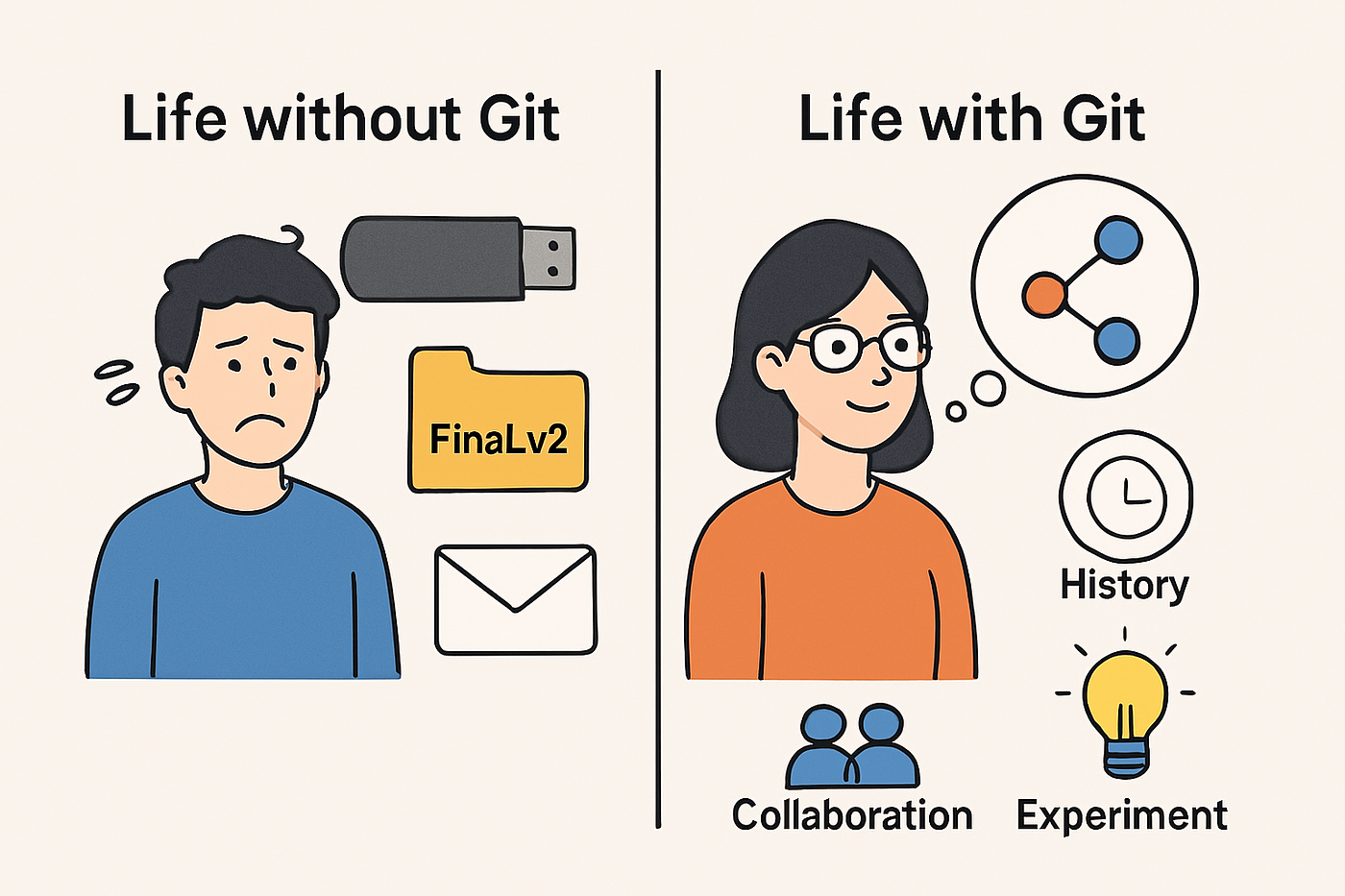
Pendrive Workflow vs Version Control Workflow
Pendrive Workflow:
One copy at a time
Manual sharing
No history
High risk of data loss
Version Control Workflow:
Everyone has a full copy
Automatic tracking
Complete history
Designed for collaboration
What once required discipline, memory, and luck is now handled by tools.
Why This Still Matters Today
If you’ve ever:
Used Git
Fixed a bug by checking commit history
Reverted a broken deployment
You’ve benefited from lessons learned during the pendrive era.
Version control doesn’t just store code.
It stores context, history, and collaboration.
And that’s why version control exists.